When we talk about water security, we must also talk about water governance. Too often, water security is narrowly understood through an infrastructural lens, dams, pipelines, and treatment facilities, while the equally critical aspect of governance is overlooked. What is the point of building infrastructure if we fail to manage, allocate, and govern water resources effectively? True sustainability requires a balance between these two pillars: infrastructure and governance.
The Kingdom of Eswatini has made significant strides to ensure the availability of clean water for its population. While water scarcity is an ongoing challenge, exacerbated by climate change, the key to sustainability lies not just in increasing supply but in allocating existing resources fairly and efficiently. Knowing who uses water, for what purpose, and in what quantities allows us to manage our natural resources responsibly, safeguarding access for all users.
Across the country’s river basins, systems are in place to monitor river flows, enabling water sharing with neighboring countries through the INMACOM agreement. Such cross-border arrangements highlight the importance of governance: water security is not only a domestic issue but a regional responsibility.
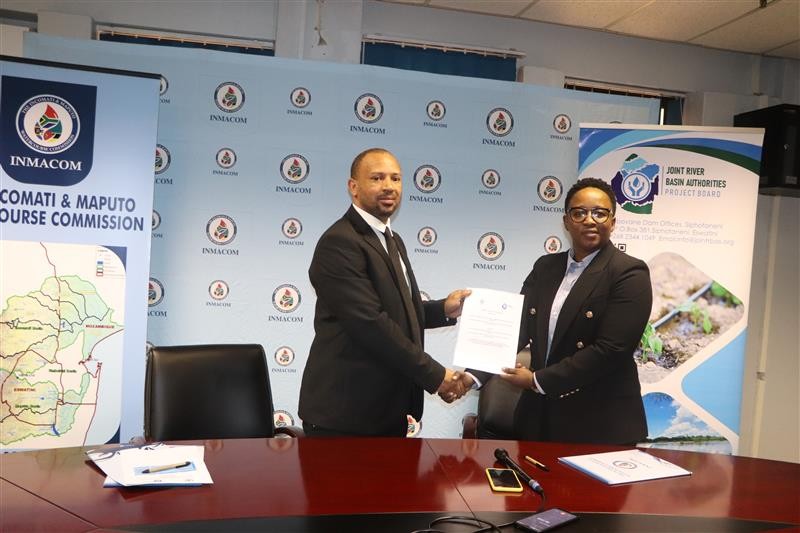
As the Joint River Basin Authorities – Project Board, we advocate for robust water governance to protect water resources for future generations. In the absence of effective governance, conflicts between water users are likely to intensify, especially as climate change amplifies variability and scarcity. Tools such as the Water Act of 2003, water pricing mechanisms, basin management plans, and water investment strategies are fundamental to regulating access and ensuring equitable distribution.
Globally, industries are undergoing rapid transformations, and these shifts place new demands on water management. As these changes unfold, governance must remain at the forefront, ensuring that water safety and sustainability are not compromised.
During the State Opening of the 3rd Session of the 12th Parliament, His Majesty the King Mswati III highlighted progress toward Sustainable Development Goal 6, noting that 75 percent of the population now has access to clean water. He emphasized the need for continued collaboration with development partners to achieve universal access to safe water by 2030, a goal that is only attainable if governance and infrastructure advance hand in hand.

Water Allocation: Supporting Business Ecosystems and Food Security
Effective water governance is not just about fairness; it is also a critical driver for economic stability and food security. Proper allocation ensures that industries, agriculture, and communities have reliable access to water, enabling businesses to operate efficiently and farmers to cultivate crops sustainably.
In agriculture, predictable water allocation supports irrigation planning, crop yields, and the stability of food supply chains, reducing vulnerability to climate shocks. For businesses, water security allows for consistent production, operational efficiency, and long-term investment planning, strengthening the overall economic ecosystem.
When water is governed strategically, it creates a virtuous cycle: industries can thrive without compromising community needs, agricultural productivity is maintained, and the food chain remains resilient, benefiting both local populations and regional trade. Conversely, poor governance can disrupt production, lead to resource conflicts, and threaten livelihoods.
By integrating water allocation into governance frameworks, the Kingdom of Eswatini ensures that water resources are not just preserved, but leveraged to support sustainable development, economic growth, and food security for current and future generations.
Water is life. But life is only sustainable when water is governed wisely. For the Kingdom of Eswatini and the region, securing our water future depends not just on building dams, but on building systems of governance that ensure fair, sustainable, and strategic management of this most vital resource. Speaking water is, indeed, speaking governance.